

Watering can: How long has it existed, and where is it used?
There are objects we rarely give much thought to. They are simply there, serving a specific purpose. But when they are missing, their absence is immediately noticeable. The watering can clearly belongs to this category. But when did it come into use, and what is its purpose?
Below, you will learn everything worth knowing about this simple yet fascinating everyday object. We also provide information about the watering cans available in our online shop.
A brief history of the watering can
The watering can, as we know it today, was developed in the mid-19th century. However, the concept of carrying water in a container and pouring it out is much older. The earliest evidence dates back to 79 AD. The Brothers Grimm noted in their German Dictionary that the term “gieszkanne” had come into use at least by the 16th century.
At that time, it had already replaced regional terms like “gieszkante” or “gieszer.” However, it mostly referred to a vessel used for washing hands. After a meal, people would pour water over their hands from it at the table, with the water collected in a basin. The can was made of silver or tin.
John Haws and his revolutionary watering can
The modern form of the watering can is credited to the Englishman John Haws. In 1884, he lived on Mauritius and had a small garden there. In this garden, he grew vanilla plants, which were not thriving. So he designed a can that could effectively water the plants.
At that time, various vessels were used for watering plants. Gardeners carried clay pots, jugs, and buckets full of water to their beds and fields. There were also watering pots with holes in the bottom. However, none of these solutions were truly practical.
Haws’ contribution was primarily the revolutionary shape of his vessel. It was easy to carry and simple to tilt for pouring water. Cleaning it was also convenient. In 1886, Haws patented the device and founded Haws Watering Cans in London. The cans were handcrafted from metal there.
For his contributions to gardening, Haws was supposed to receive an award from the Royal Horticultural Society in 1913. He was also invited as an honorary guest to the first Chelsea Flower Show that same year. Unfortunately, he passed away shortly beforehand.
Development up to the present
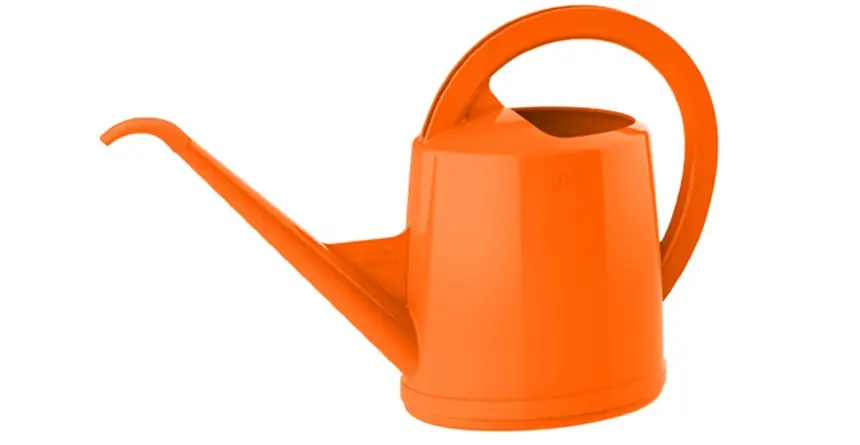
In addition to the English form developed by Haws, a French equivalent soon emerged. English cans had a round body and a rear handle. French models, on the other hand, were oval, with a handle that extended over the entire can. It quickly became apparent that the French design was easier to handle.
It was easier to carry, as it could be held closer to the body. Moreover, it could be poured with one hand. As a result, the French style of watering can gained more followers and remains popular to this day – as a look into our shows.
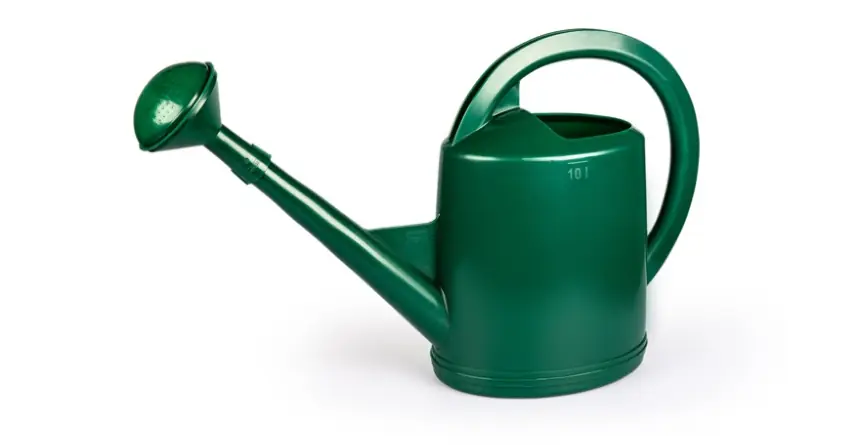
In the 19th century, watering cans were made of metal, as it was the easiest material to work with. Nowadays, they are mostly made of plastic, making them much lighter than their predecessors.
For those interested in the history of watering cans, the town of Giessen in Germany is a must-visit. Since 2011, it has been home to the Watering Can Museum. On about 100 square meters, it displays more than 1,200 objects from around the world. All exhibits are either donations or long-term loans from citizens.
What watering cans are used for
Watering cans are useful whenever plants need to be supplied with water. They are especially suitable for gardens. When the planted beds are not too large, watering cans prove very practical, as the gardener does not need to install an elaborate and expensive irrigation system.
Instead, the gardener fills the can at a faucet, well, or rain barrel and carries it to the plants. Depending on the size of the area to be watered, multiple trips may be necessary.
Another important use for watering cans is indoors. Houseplants need regular watering, and indoor watering cans are usually much smaller than garden cans. They also focus more on design. Balcony plants are also typically watered with an indoor watering can.
What makes a good watering can
Anyone buying a watering can should first consider a few key factors. The most important one is the intended use. Will the can be used in the garden, or rather inside the house or apartment? The answer determines how large its capacity should be.
For outdoor use, the can should hold at least seven liters of water. This ensures you don’t have to make unnecessary trips while watering. For indoor use, a smaller capacity is usually sufficient. However, the right choice also depends on how many houseplants need watering.
Easy to carry
Another important factor is carrying comfort. When empty, every can is easy to handle — but once it’s full of water, that changes. A good watering can should be comfortable to carry even when filled. Its center of gravity should be balanced to prevent water from sloshing or spilling while being moved.
Pouring should also be effortless. High-quality watering cans, such as those made by A. & J. Stöckli AG, feature an ergonomic handle. Thanks to this, even a full can can be emptied easily with one hand.
The design of the can is another key criterion. This includes not only its attractive shape but also its color. Indoor watering cans should look appealing, as they are often kept in visible areas. For outdoor cans, UV protection is important so that sunlight does not damage the material.
Practical accessories
The usability of a watering can also depends on its accessories — most notably the rose (spout head). It helps distribute water evenly and gently over the plants. On a high-quality can, the rose can be easily removed and reattached. It should also fit securely and withstand the water pressure during use.
Watering cans designed for indoor plants or greenhouses often feature an extended spout. This makes it easier to reach plants in tight or high spots. Ideally, this extension also fits firmly and can be detached when needed.
Watering cans from A. & J. Stöckli AG
The watering cans available in the A. & J. Stöckli AG online shop are manufactured at the company’s headquarters in Netstal. They carry the “Swiss Made” label, which stands for top quality. Our range in this category is also diverse — you’ll find cans in the following sizes:
- 2 liters
- 4 liters
- 5 liters
- 7 liters
- 10 liters
- 12 liters
Our products are suitable for every garden bed, windowsill, or greenhouse. You’ll also find watering cans in a variety of colors in our range — and some models are even available in several different shades.
The Ladies’ Watering Can
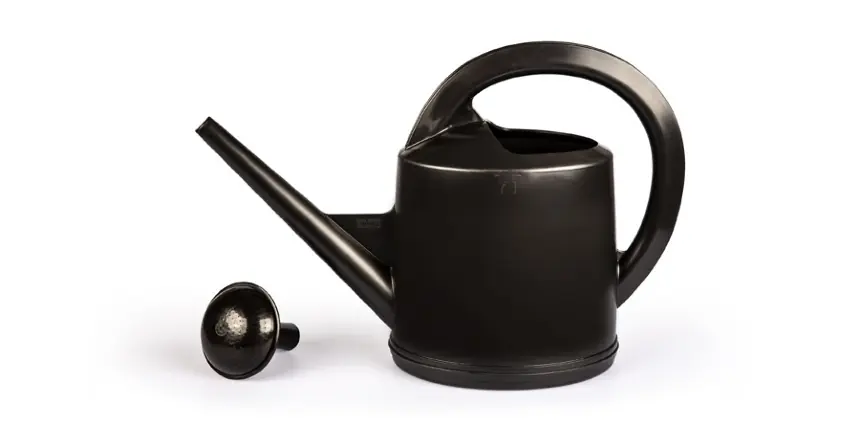
A special highlight in our range is the Ladies’ Watering Can. It has a capacity of seven liters and is made of UV-resistant plastic. Its handle is ergonomically shaped, making it particularly easy to use. Each can comes with a detachable rose that can be effortlessly attached or removed. This allows the water to be distributed gently over as many plants as possible.
The Ladies’ Watering Can is always available in red, green, and black. We currently also offer a limited-edition version in two additional colors: Royal and Lollipop.
Watering cans for houseplants and greenhouses
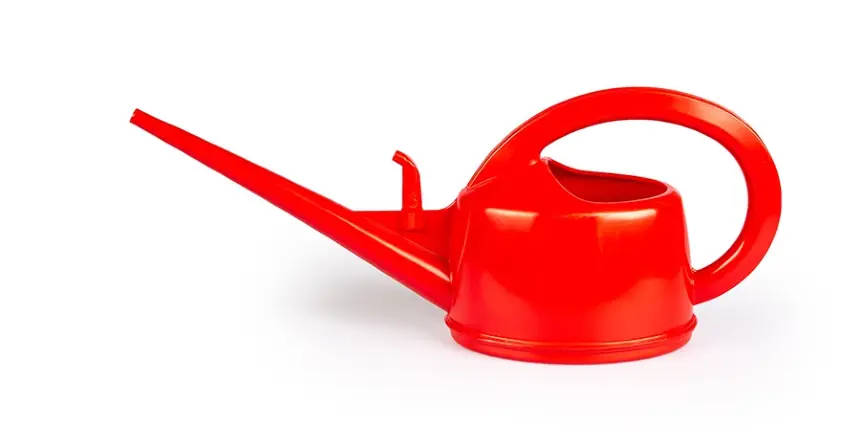
When watering indoor plants, only small amounts of water are usually needed. Using a can with a capacity of five liters or more is therefore unnecessary. In addition, an oversized watering can takes up a lot of space and may become inconvenient to store. A smaller model is therefore preferable – such as the two-liter indoor watering can from Stöckli.
Its long spout makes it easy to water plants with dense foliage. The spout can even be extended thanks to the included attachment. We offer this indoor watering can in red and green.
Only small amounts of water are typically required for watering plants in a greenhouse as well. In most cases, the goal is to gently supply seedlings with moisture. Our greenhouse watering can is perfect for this purpose. It comes with a detachable rose, allowing you to water young plants with care. The can has a capacity of five liters.
Watering cans made from recycled materials
Among the watering cans in our range, you’ll also find models made from recycled plastic. This means that only materials returned to the recycling cycle were used in their production. In doing so, we make an important contribution to environmental protection — and you can too, by choosing one of these sustainable watering cans.
Suitable accessories for our watering cans
In addition to watering cans, our online shop also offers a selection of spray heads (roses). When purchasing, make sure that the rose fits your can. The capacity indication of the watering can shows which model it is compatible with. Each rose is available in the matching color of its corresponding can.
The accessories for watering cans in our assortment also include spout extensions. These extend the existing spout, making it easier to water hard-to-reach plants.
We also offer a fertilizer rose that is compatible with all watering cans in our range with a capacity of ten or twelve liters.
A. & J. Stöckli: A long success story
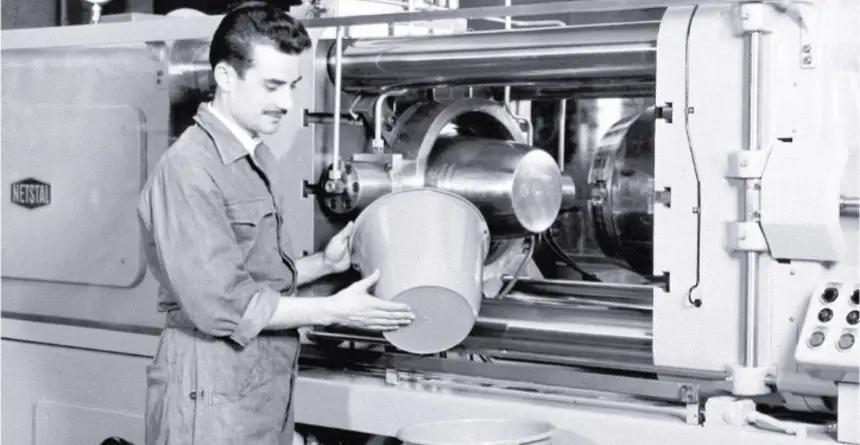
The history of A. & J. Stöckli AG dates back to the 19th century. In 1874, Alfred Stöckli began producing various metal goods, including chafing dishes and ashtrays. At first, he worked with just two assistants, but over time the company continued to grow. He even achieved several milestones — one of them being the invention of the portioned raclette oven in 1969.
Today, our diverse product portfolio includes electrical appliances such as the Dörrex food dehydrator and the PizzaGrill. We also offer fondue pots and matching accessories. In addition, we manufacture buckets and shopping baskets.
For some time now, watering cans have also been part of our range. Like all Stöckli products, they are designed with great attention to function and made to the highest quality standards.
Your contact to Stöckli
Do you have questions about our watering cans or any other products from our range? Don’t hesitate to get in touch with us. You can use the convenient contact form on our website. Alternatively, you can also reach us by phone, WhatsApp, or email.
RELATED POSTS
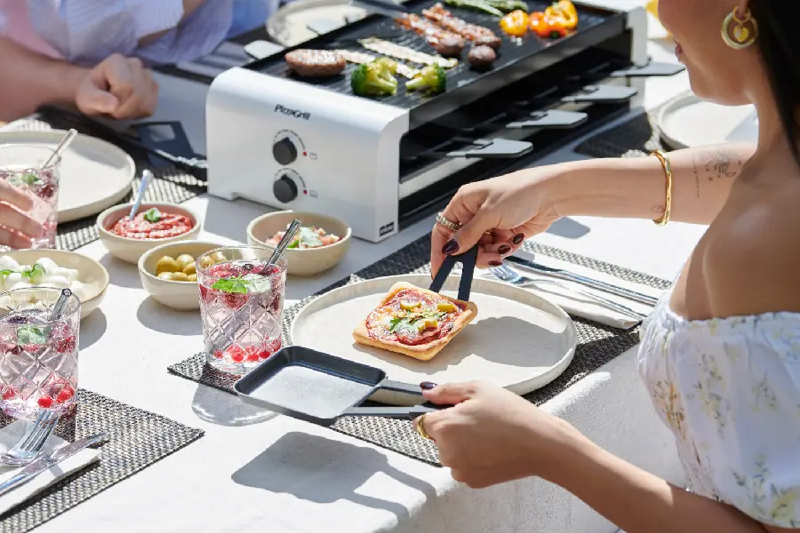
Balcony barbecue with the electric table grill
A balcony barbecue is the quintessential summer classic. Especially in cities, grilling on the balcony is incredibly popular. Those without a garden can simply move their summer culinary experience to their own outdoor space...

Watering cans for houseplants vs. garden plants
Anyone who wants to care for healthy plants needs the right tools. A suitable watering can is especially important. Watering cans for houseplants differ significantly from models for the garden in several ways. Those who water daily or weekly...

Electrical appliance accessories: Useful helpers for the kitchen and household
What would a raclette evening be without the right pans, or a dehydrator without additional plastic or metal drying racks? Only with the right appliance accessories can you get the most out of your kitchen appliances. It's often the little things...

Shopping baskets: Stylish and practical shopping
A shopping basket is much more than just a simple shopping companion. It combines functionality with style and ensures that your groceries are transported safely and comfortably. Whether at the farmers' market or the supermarket – a...