

What is a caquelon?
Whether on cold, snowy winter days or warm summer evenings, one thing must never be missing: fondue. It is one of the typical Swiss dishes and tastes great on any occasion and in any season. Cozy evenings with friends and family around a Caquelon can never be enjoyed too often.
In the center of the table, the burner with the matching Caquelon takes its place, and everyone can serve themselves to their heart's content. As simple as it may sound, there are some things to consider when hosting the perfect fondue evening. What should you look for when choosing the ideal Caquelon, and what exactly goes inside?
What accessories might be necessary? What tips and tricks ensure that the fondue succeeds every time? Questions upon questions arise, and we have the answers. Fondue is not just a dish; it is almost a way of life. It stands for sociable gatherings, enjoyment, and good cheer. But where did the idea actually come from?
A Look at the History of Fondue
Whether it was the Swiss, the French, or the Italians who invented fondue remains unclear. However, it is known that even Homer, around 2,800 years ago, mentioned a similar dish in his work "Iliad."
In Switzerland, the dish was first mentioned in 1699 in the cookbook of Anna Margaretha Gessner. She called it "Käss mit Wein" (cheese with wine). The big breakthrough for fondue, however, came only in the 1950s. It appeared in army cookbooks, and the soldiers significantly contributed to its popularity. In 1955, ready-made fondue became available for the first time.
Thanks to targeted marketing, the dish slowly but surely developed into a well-known and widely loved national dish. It all started at home in small gatherings. Guests would gather around the table, where the fragrant and steaming Caquelon stood, and enjoy the meal. Today, fondue can be enjoyed almost anywhere. Cheese festivals and fondue igloos are just a few examples of the unique culinary experiences of our time.
No Fondue Without a Caquelon
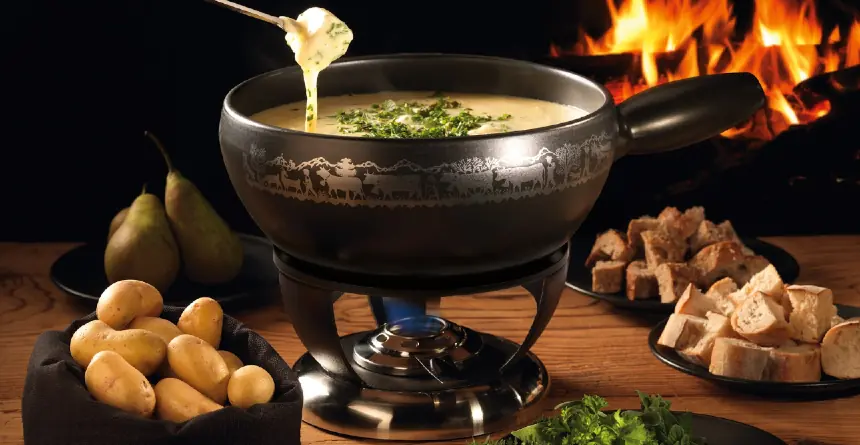
Anyone who wants to bring the perfect fondue evening home naturally needs one thing: a high-quality Caquelon. Essentially, it is a pot in which the fondue is prepared. Typically, the Caquelon is made of cast iron, steel, or ceramic. There are also models made of porcelain.
All of these materials conduct heat slowly. This means the Caquelon warms up gradually, allowing the cheese to melt slowly without burning. For this reason, the bottom of the pot must also have a certain thickness. The typical Caquelon is round and comes with a handle, which makes it easy to lift the pot from the burner or stove.
Those who want to heat the fondue on an induction stove are safest with a cast iron model. Undeniably, fondue pots made of ceramic or clay radiate a certain coziness and create a rustic atmosphere. However, those who do not want to miss out should be aware that these materials can only tolerate limited heat. To avoid the risk of the pot cracking, heat distribution plates are recommended, which are available in our shop.
A Look at the Stöckli AG Range
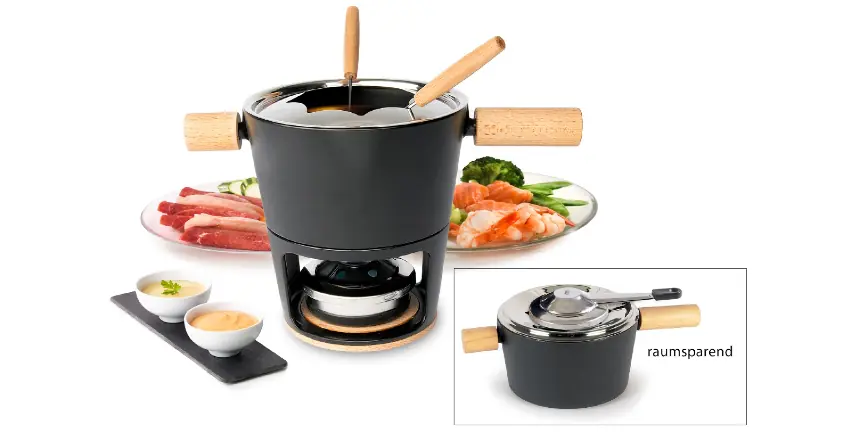
At Stöckli AG, we offer everything you need for your cozy fondue evening. One of our bestsellers is the Titlis fondue set. The sturdy black cast iron pot is induction-compatible, so no additional heat distribution plates are necessary. Thanks to the splash guard, you’re also protected from annoying stains.
The model is also visually appealing. The light wooden handle forms a stylish contrast with the dark cast iron. Just like the Caquelon, the burner stand (Rechaud) is made of cast iron. It also features a wooden base and a paste safety burner. Six fondue forks complete the set.
The highlight of the Titlis fondue set is that it can be stored compactly by stacking the pieces inside each other. Prefer a nostalgic touch? Then our Classic Rechaud is the perfect choice. It uses alcohol fuel and comes with a wick burner that can be precisely adjusted.
Want to move the fondue evening outdoors? Our windscreen makes that easy. Main course and dessert in one? No problem with our Choco-Cheese set. Craving something sweet? Fill the Caquelon not with cheese, but with chocolate. Grab some fruits, dip them in, and enjoy.
What Goes into the Caquelon?
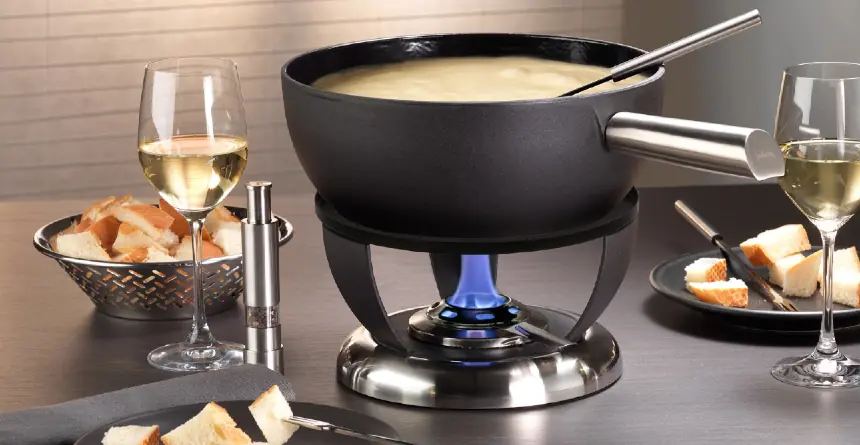
Anyone who has acquired a new Caquelon will naturally want to invite friends for fondue right away. But what exactly goes into the pot to make the taste experience perfect? Essentially, a fondue consists of cheese, white wine, starch, and a few spices. Which spices are used varies by region. But in principle, anything that tastes good is allowed.
Let’s start by talking in more detail about the cheese, because not every type is suitable. Both aging and ripeness are crucial, as they determine the protein composition of the cheese. The longer it has matured, the more protein it has broken down, and the better it melts.
Classic choices include Appenzeller, Emmental, Gruyère, or Vacherin Fribourgeois. The latter has a slight acidity that makes the fondue pleasantly creamy. Young cheeses like green Tilsiter or Edam are not recommended. If you still want to use them because nothing else is available, a few tricks can help.
For example, a splash of lemon juice can help and make the mixture creamier. Another secret tip is processed cheese. If you want to be 100% sure the fondue does not separate, add a few slices. They have a binding effect because they contain melting salts. However, the proportion of this cheese should not exceed 10%.
The Wine Makes the Difference
Next comes the wine. It not only goes into the fondue but is also often enjoyed alongside it. Let’s first focus on the cheese mixture. Acidic white wines are best for stirring in. Other options include:
- Sparkling wine
- Beer
- Fermented apple juice
- Water
For 400 grams of cheese, about 150 milliliters of liquid should be used. In the glass, it’s best to pour a dry white wine like Walliser Fendant or Chasselas. Red wine lovers can also use it, but light varieties with low tannins are recommended. Regardless of the cheese, wine, or other helpers you choose: fondue should always simmer gently. Constant stirring is a must. The mixture should always remain in motion.
Time to Dip
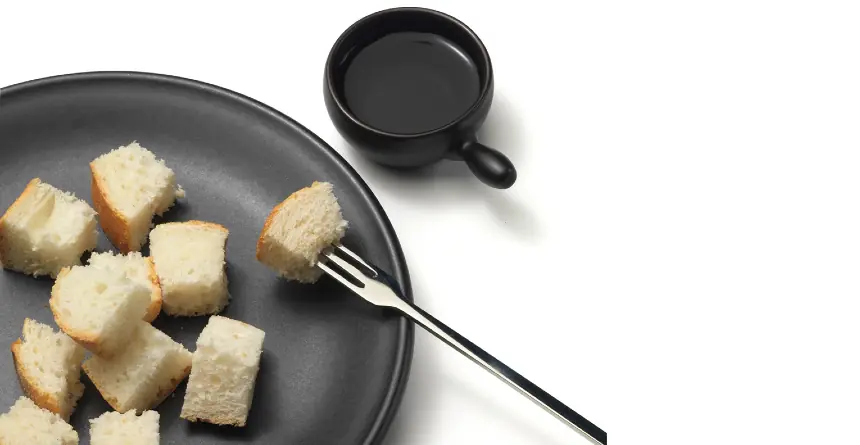
A fondue is only complete when there is delicious bread to dip into it. Of course, tastes differ here as well. Whether white bread, mixed bread, or dark multigrain bread, all are excellent choices. But surely you’ve experienced the bread slipping off the fondue fork and sinking deep into the cheese.
Retrieving it requires a delicate touch. It’s better to use day-old bread, as it sticks better to the fork. This does not affect the taste at all. One small tip: to avoid forming a crust, run the bread’s crust along the bottom. However, for many, this crust is the final highlight of the fondue. But it doesn’t always have to be bread.
Boiled potatoes are also excellent for dipping. To prevent them from slipping off the fork, choose a waxy variety. If the fondue is nearly finished but appetite remains, eggs provide the crowning touch. Two to three eggs are stirred into the remaining cheese mixture and seasoned once more. This can easily be enjoyed by dipping the leftover bread.
Recipe Ideas for All Fondue Fans
Need some inspiration to jazz up the traditional fondue? We at Stöckli AG are here to help and have compiled a few ideas for you.
Fruity Fresh: The Valais Tomato Fondue
How about a Valais tomato fondue? To serve four people, first melt about 30 grams of butter in the Caquelon. Add one finely chopped onion, a halved clove of garlic, and three peeled and deseeded jarred tomatoes. Sauté briefly, then deglaze with 250 milliliters of white wine.
Next comes the cheese. Add 500 grams of Valais raw milk raclette and 300 grams of grated Emmental to the Caquelon. Heat gently over low heat, stirring vigorously. Then add a splash of Kirsch. Dissolve four teaspoons of starch in it and mix into the pot. After heating again, season to taste with pepper, oregano, marjoram, and a pinch of nutmeg.
For Gourmets: The Champagne Fondue
For lovers of fine drinks, a champagne fondue is ideal. For four people, rub the Caquelon with a garlic clove and pour in 500 milliliters of rosé champagne. When it begins to simmer slightly, add 300 grams of Vacherin Fribourgeois and 500 grams of Gruyère, with half being mature and half mild.
Stir vigorously; within minutes the cheese melts. Keep stirring! Four teaspoons of lemon juice provide a fine acidity and smooth texture. Then add four teaspoons of starch, mixed with 50 milliliters of whiskey in a separate glass.
Stir the mixture into the Caquelon. Once the desired consistency is reached, season with pepper, paprika, and nutmeg. Finally, add another 50 milliliters of whiskey, and the champagne fondue for gourmets is ready.
Hops and Malt in the Caquelon: The Beer Fondue
Prefer a cold beer? Then a beer fondue is the way to go instead of champagne. Pour 125 milliliters of malt beer and 125 milliliters of pale beer into the Caquelon. Add two sugar cubes, rubbed with the zest of an orange, and include the citrus juice. Stir well and gradually heat the liquid.
Gradually add 400 grams of Chester and 300 grams of Butterkäse. Stir until both cheeses melt and form a homogeneous mixture. Ensure the fondue never boils. Add a little pepper, two teaspoons of mustard, and parsley to finish. For this recipe for four people, pretzel sticks are perfect for dipping.
Say Goodbye to Lingering Odors
As enjoyable as the meal is, fondue can leave unpleasant odors in the home. The smell of cold cheese the next morning isn’t everyone’s favorite. Ventilation alone isn’t always enough, as these smells tend to linger longer than desired. But there are simple tricks: for example, place an orange studded with cloves on the dining table overnight. A small bowl of vinegar or coffee grounds also neutralizes odors.
Unique Moments of Enjoyment with Stöckli AG Products
At Stöckli AG, we are dedicated to shared cooking experiences. Gathering with friends and family to enjoy a cozy meal – is there anything better? Our products aim to create unique experiences that you and your guests will fondly remember. With our fondue sets, pizza grills, chestnut ovens, raclette ovens, and many other products, this is possible. Browse our online shop and for detailed advice, contact us.
RELATED POSTS
Balcony barbecue with the electric table grill
A balcony barbecue is the quintessential summer classic. Especially in cities, grilling on the balcony is incredibly popular. Those without a garden can simply move their summer culinary experience to their own outdoor space...

Watering cans for houseplants vs. garden plants
Anyone who wants to care for healthy plants needs the right tools. A suitable watering can is especially important. Watering cans for houseplants differ significantly from models for the garden in several ways. Those who water daily or weekly...

Electrical appliance accessories: Useful helpers for the kitchen and household
What would a raclette evening be without the right pans, or a dehydrator without additional plastic or metal drying racks? Only with the right appliance accessories can you get the most out of your kitchen appliances. It's often the little things...

Shopping baskets: Stylish and practical shopping
A shopping basket is much more than just a simple shopping companion. It combines functionality with style and ensures that your groceries are transported safely and comfortably. Whether at the farmers' market or the supermarket – a...